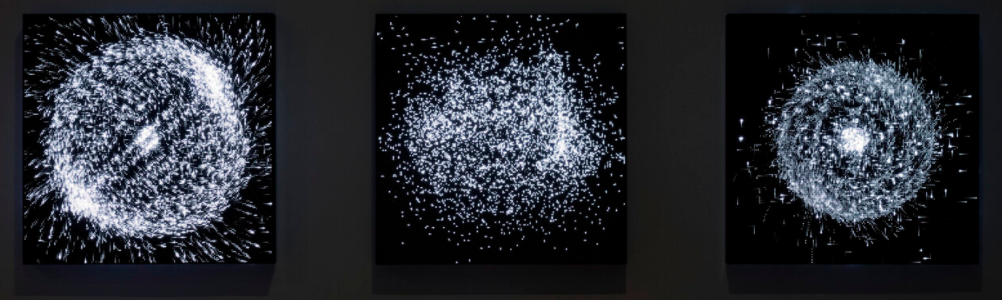
Leo Villareal is an American light artist who works primarily with LEDs and coding to create rhythmic illuminated displays. He achieves the desired outcome by focusing on the small details of the system, namely the pixels and binary code. Using his own custom software, Leo is able to manipulate parameters such as opacity, speed, and scale. These seemingly random patterns in each LED come together to create a cohesive piece of work. His art is displayed in both galleries and public settings.
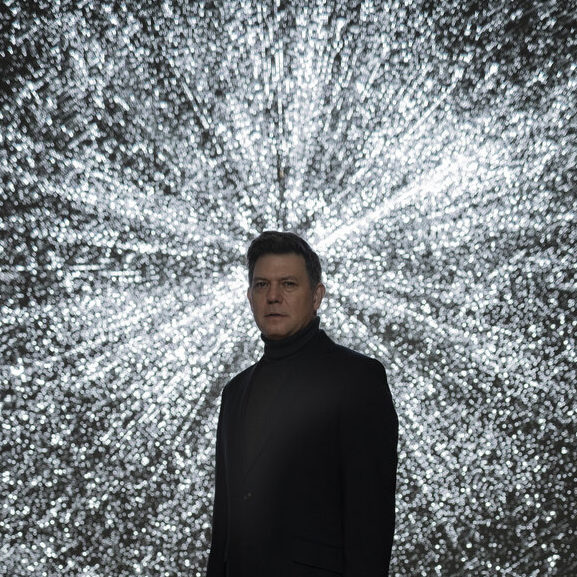
Villareal began his artistic journey by using simple microcontrollers and the program BASIC. By using “zero” as off and “one” as on, he was able to control sixteen lights. He built up sequences from there, and eventually began to use programs that gave him real time control of the lights. These programs include Macromedia Director, Max, MSP, and Jitter. During the creation of his piece for the National Gallery, the software he was using was unable to handle the volume of the 41,000 lights. Because of this, Leo worked with several programmers to create his own custom software application.
Leo’s inspirations include light artists such as James Turrell and Dan Flavin. In addition, he is inspired by mathematician John Conway’s Game of Life in which patterns are generated by simple mathematical rules. His sequences are generally improvised and he plays around until he finds a moment that he likes.
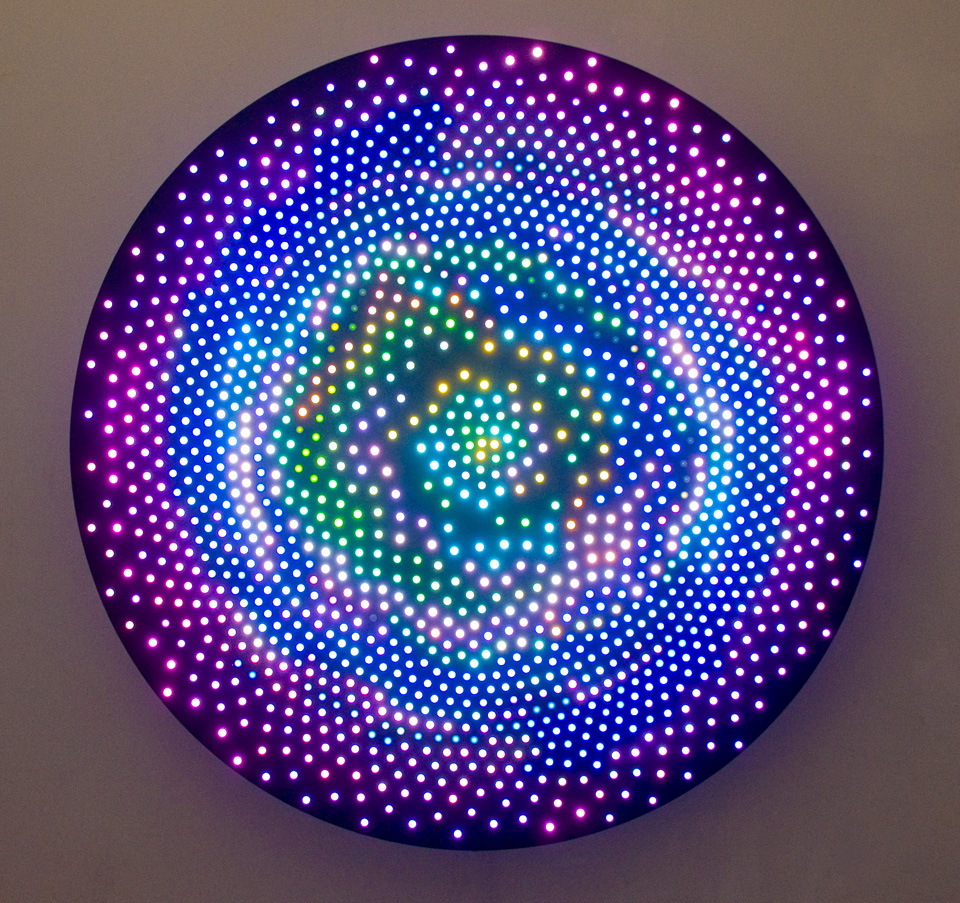
One of his pieces is called the Light Matrix and is on MIT’s campus in Cambridge, Massachusetts. Completed in 2016, this piece has 240 nine-foot steel rods. Each rod has 72 LEDs with 250 levels of brightness, totaling 17,280 lights. The mirrored surfaces on this piece reflect the light and enable the viewer to experience the work from up close and from far away.

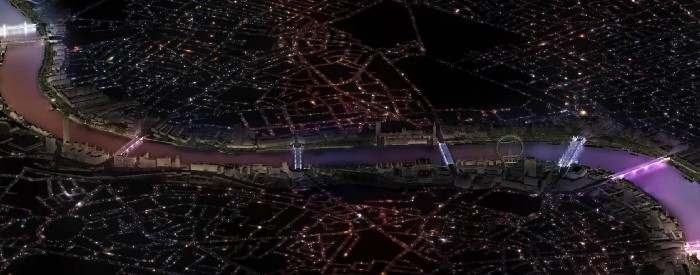
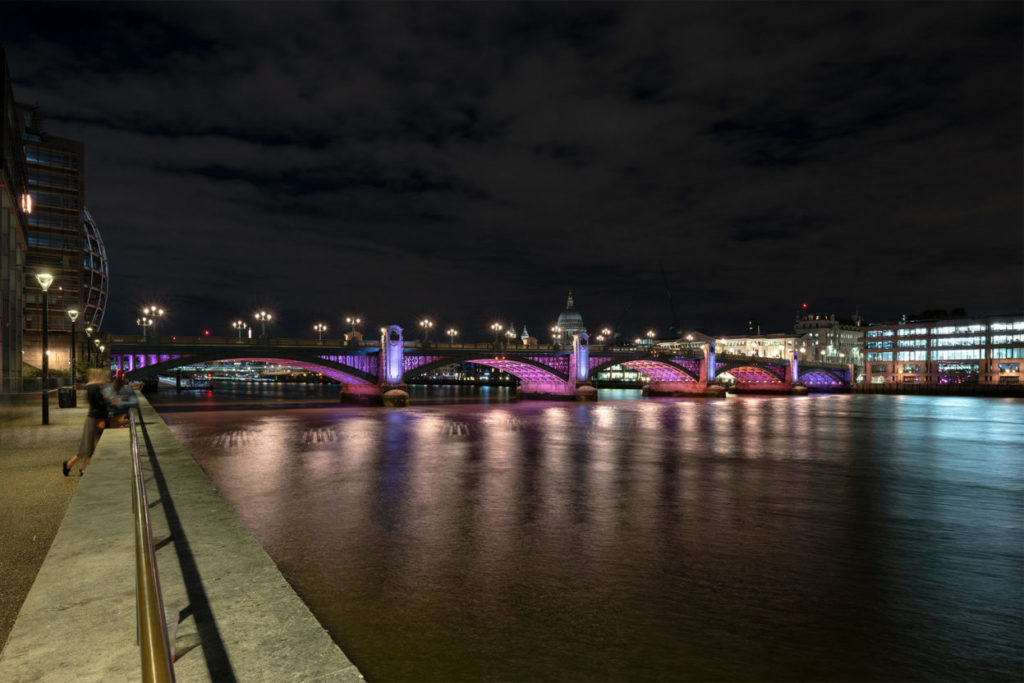
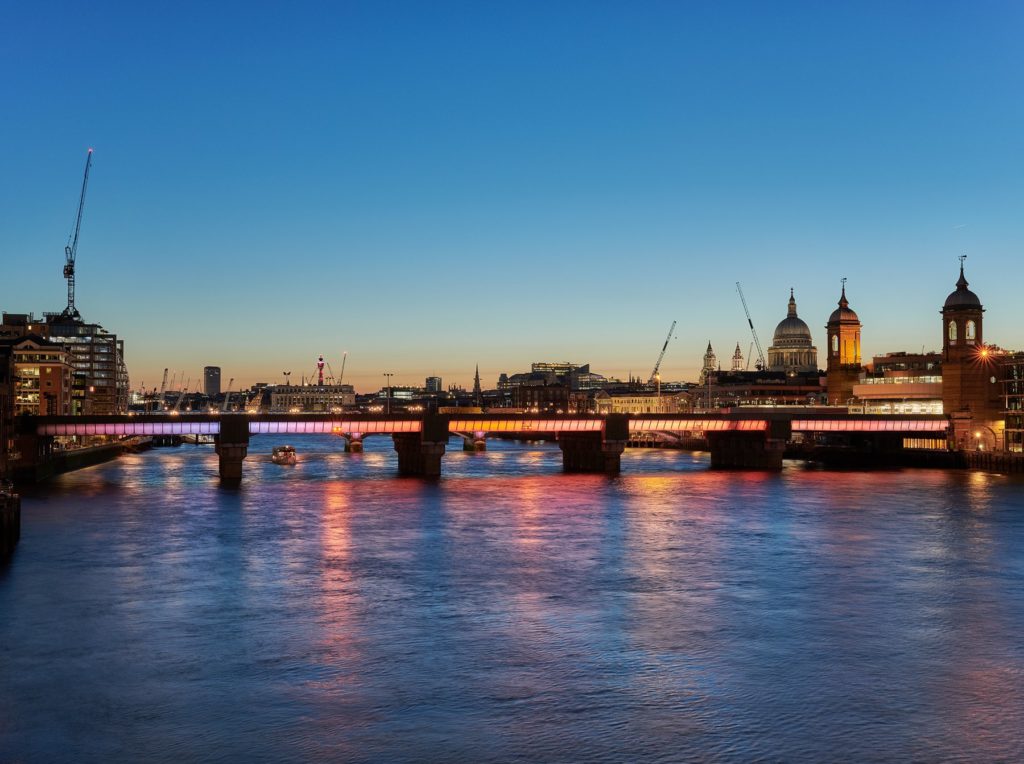
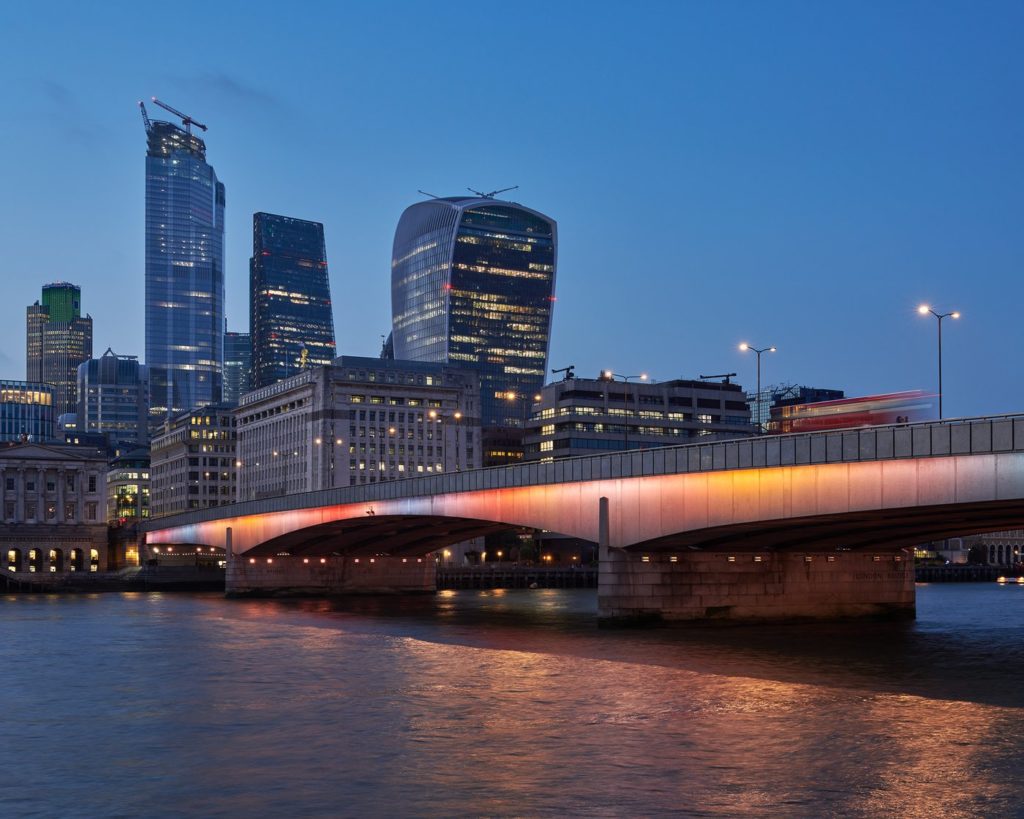
In December 2016, Leo won a competition to create the “Illuminated River.” This work consists of lighting up fifteen bridges across the Thames in London to create a sense of unity. It includes famous landmarks, concrete road bridges, rail bridges, and pedestrian bridges. Him and his team used virtual models to simulate the light on the bridges and reflection on the water.
One of Villareal’s most famous pieces is The Bay Lights in San Francisco, California. This bridge is 1.8 miles wide, 500 feet high, and contains 25,000 LED white lights. The first few months consisted of light installation. From there, Leo began experimenting with patterns from a wireless link that connects to his computer. He worked from up close and from at a distance to create randomized sequences that will never see the same progression twice. This project was originally a temporary installment but was so popular that it has since been reinstalled permanently. It is said to boost the regional economy by more than $100 million each year.