Peter Erskine is an American artist who installed his first work in 1989. His works all focus around the theme of sunlight, rainbows, and the environment.
All of Erskine’s works belong to the same exhibition “S.O.S”: “Secrets of the Sun”.
His works are all centered around three main principles:
“The rainbow is a very deep memory for humans. It has been coded into our genetic material over millions of years. Seeing a rainbow restores our connection to Nature – it restores our physical and psychic functions.” – Jonas Salk, M.D., Inventor of the first Polio Vaccine
Tools and Technique:
Unfortunately, Erksine does not provide much information about the actual fabrication of the glass and prisms used in his art. However has provided many diagrams, photos, and descriptions about the technology behind his art and art making progress.
For each of his works, he first creates a scale model of the space in his own studio and experiments with mirror, glass, and prism placement to reach his desired outcome.
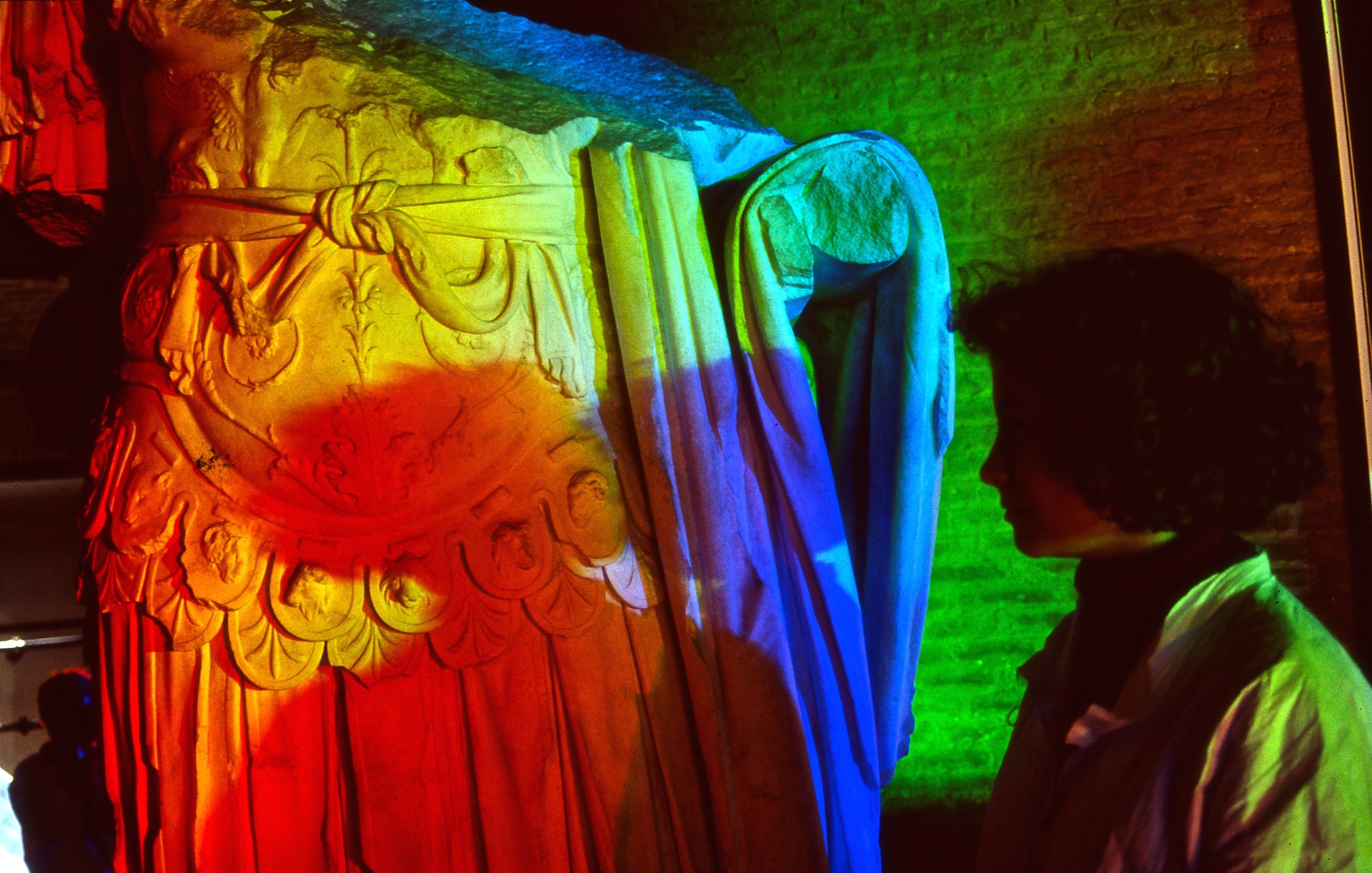
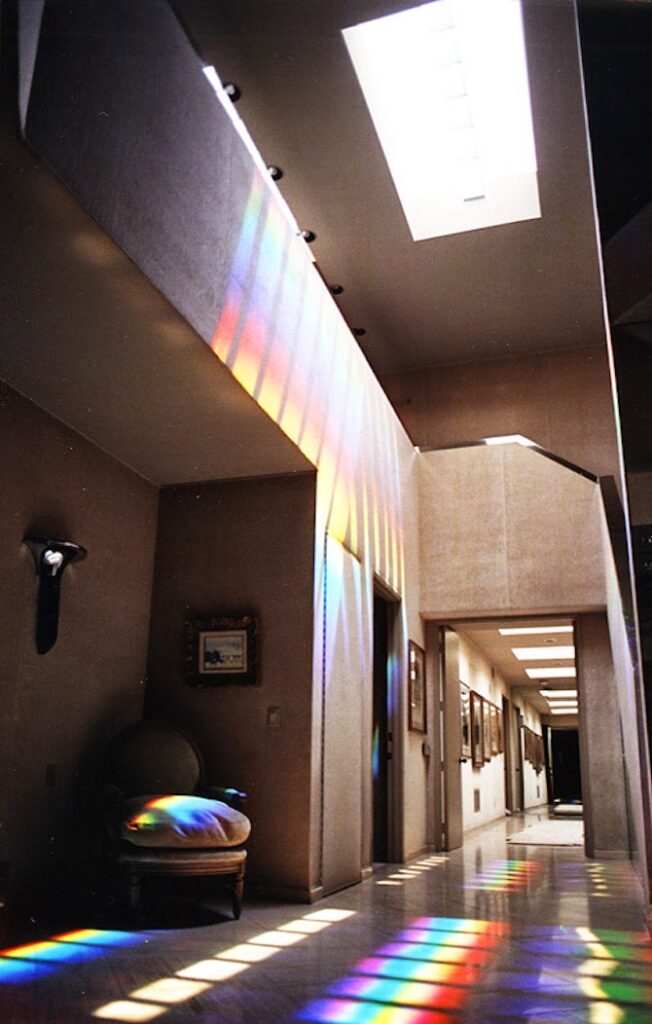
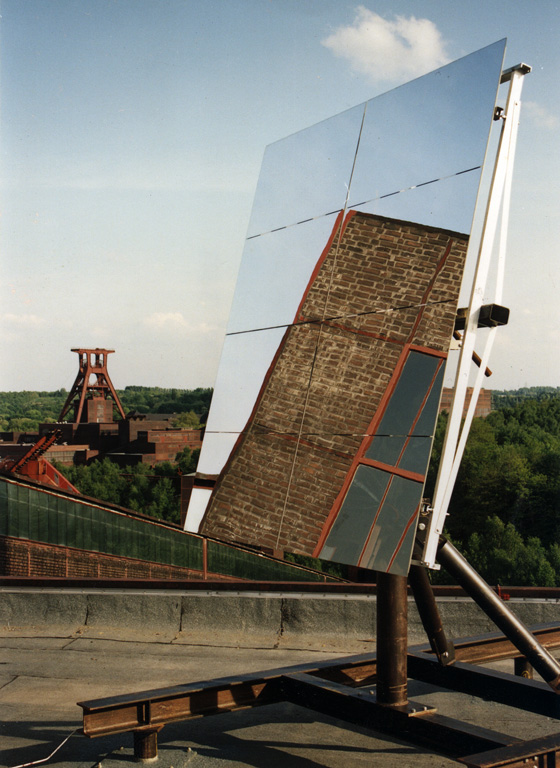
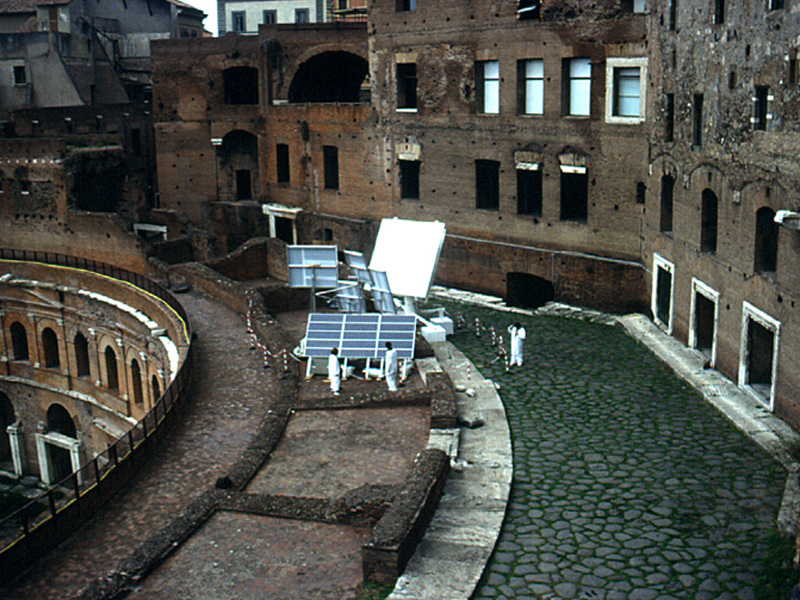
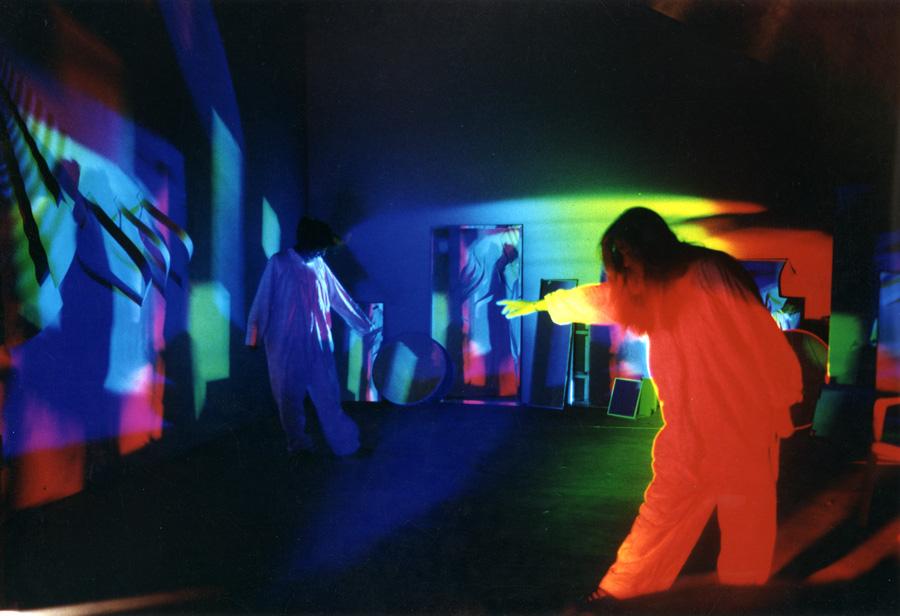
Scale model of what I believe is the Milan Train TerminalSolar Panel powering his heliotracker on a factory rooftop in GermanyPhoto of the heliotracker and solar panels powering the installation at the Roman ForumInside Erskine’s art studio. Modeling the roman forum using his niece as a statue (?)Diagram of how light enters the building, gets scattered and transformed before finally hitting the ground.
As mentioned above Peter Erskine does not publish much about the actual fabrication process, or the actual prisms and mirrors that make up the installation so the following gallery features some of the few images I could find.
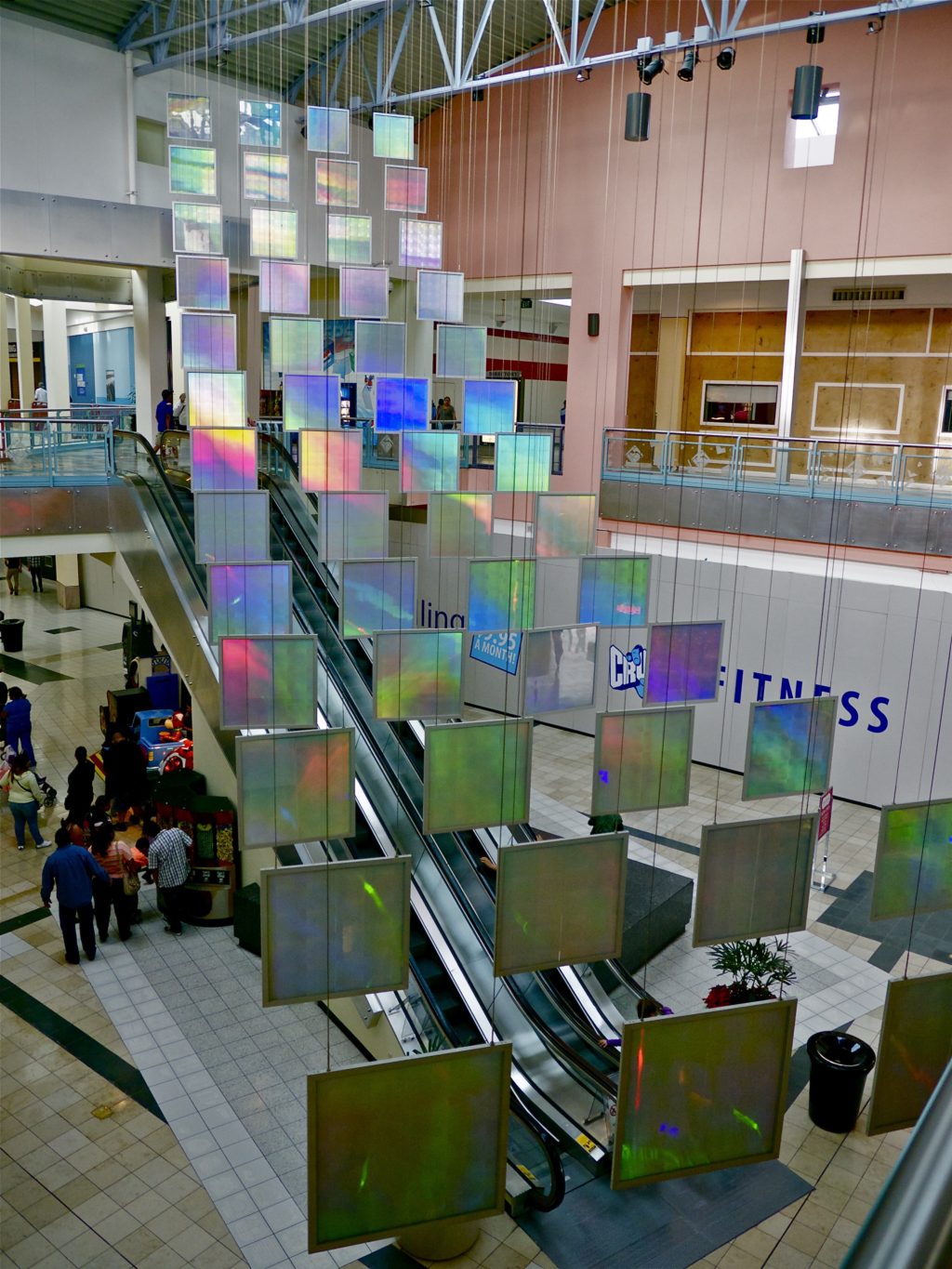
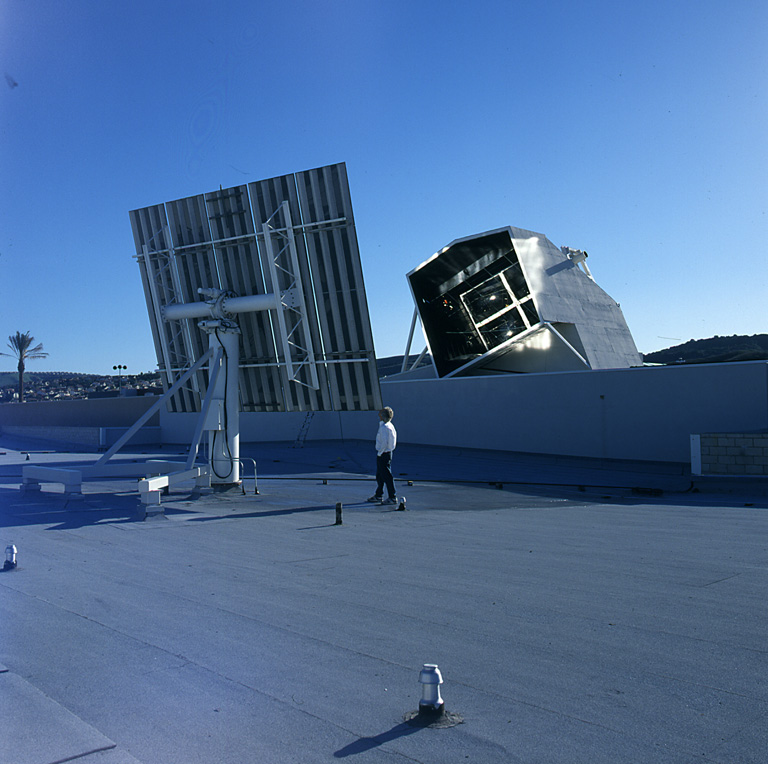
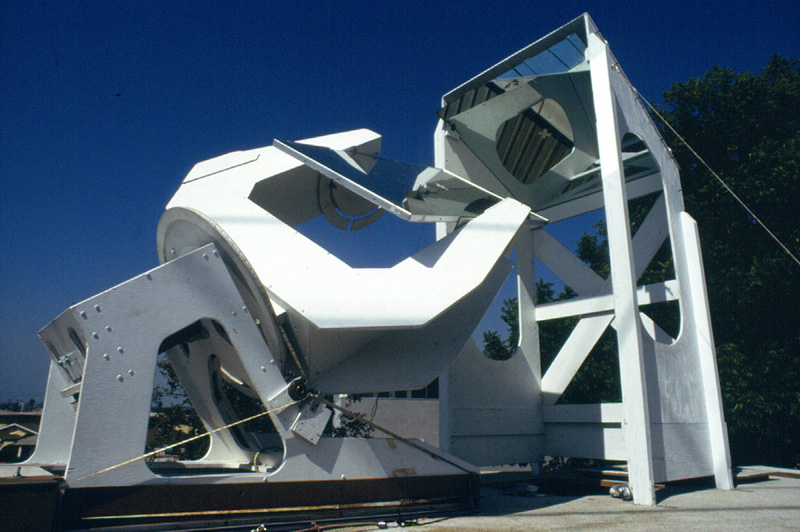
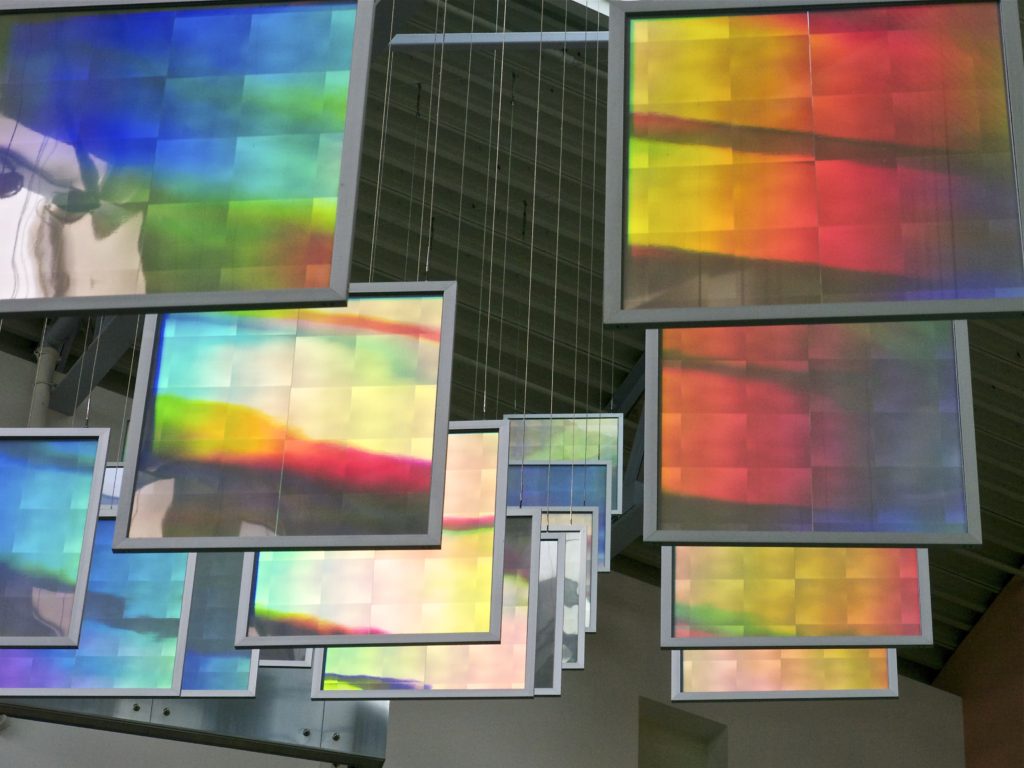
52 prismatic panels at the “52 WEEKS 4 SEASONS” installation Heliostat at the “SUNDANCE” installationHeliostat at Erskine’s studio in CaliforniaCloser look at the prismatic panels at “52 WEEKS 4 SEASONS”
Secrets of the Sun: Millennial Meditations, Roman Forum, Rome
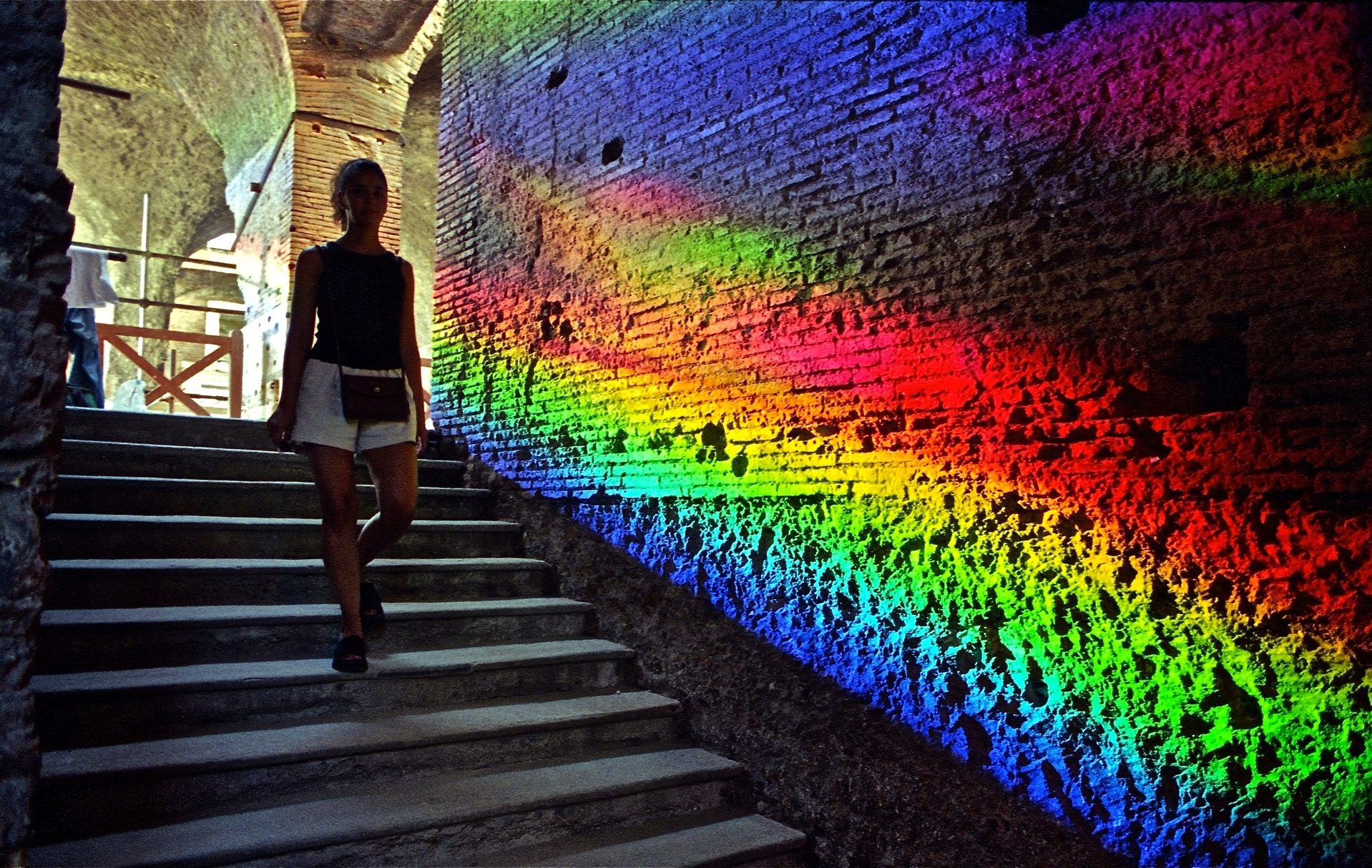
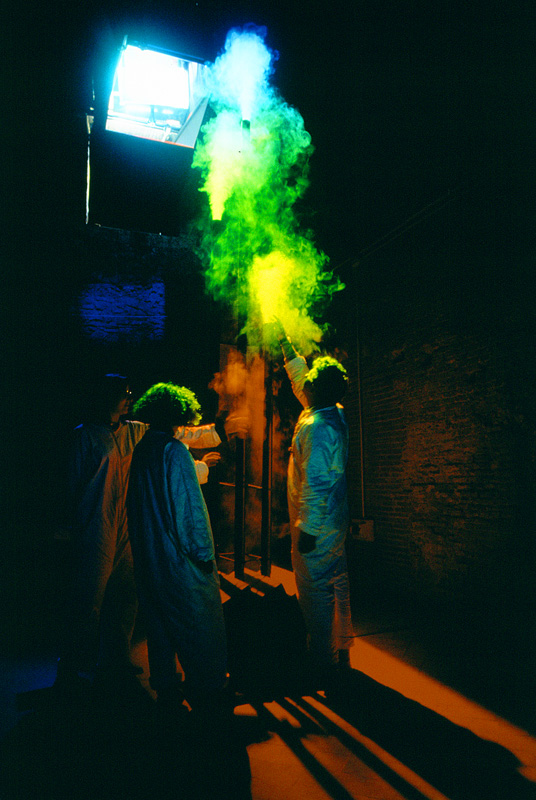
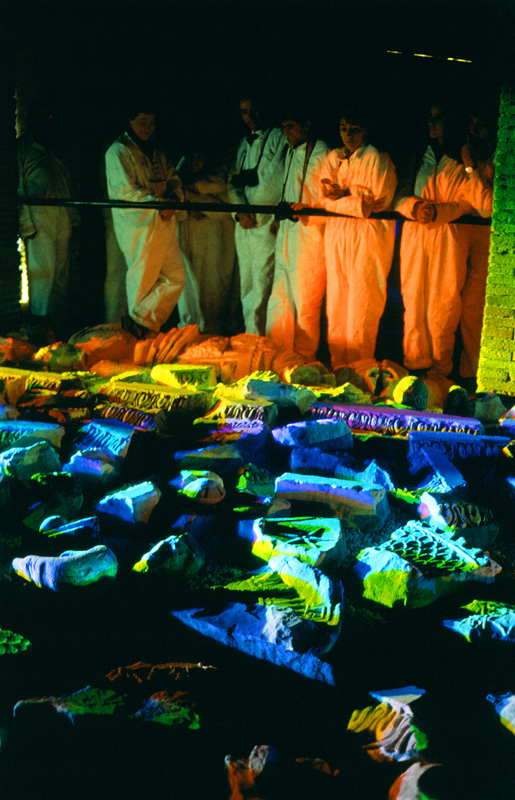
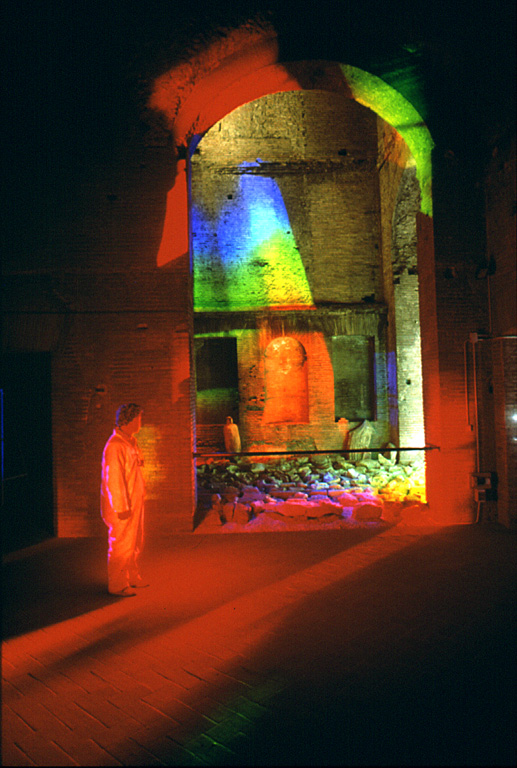
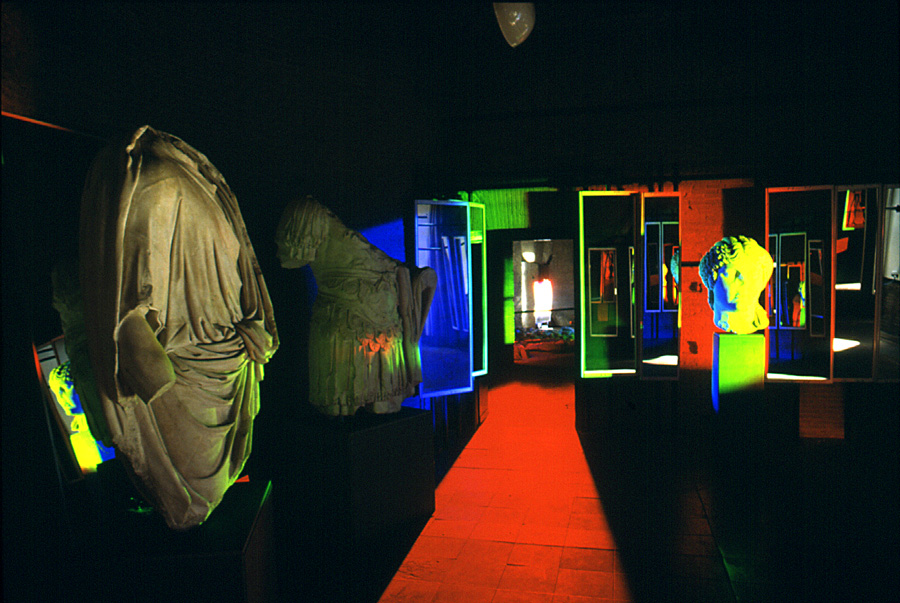
Secrets of the Sun: Millennial Meditations was Peter Erskine’s first installation as well as the first site-specific installation at the Forum. The works were meant to comment on how like the light installations, the Forum was built by solar powered people and animals (1). The works were paired with a collaboration with two sound artists who filled the space with the sounds of the modern urbanized “fossil fueled” Rome to emphasize how far we’ve strayed from relying on nature.
Spectrum Vapor ChimneysVisitors were required to wear these white suits while inside the exhibit, becoming apart of it as the light reflected off of themThe Light from AboveRoom of Reflected History
The Ecstasy of Santa Lucia, Church of Santa Lucia de Ocon, La Rioja, Spain, 2011
watch from 7:10 to around 8:50
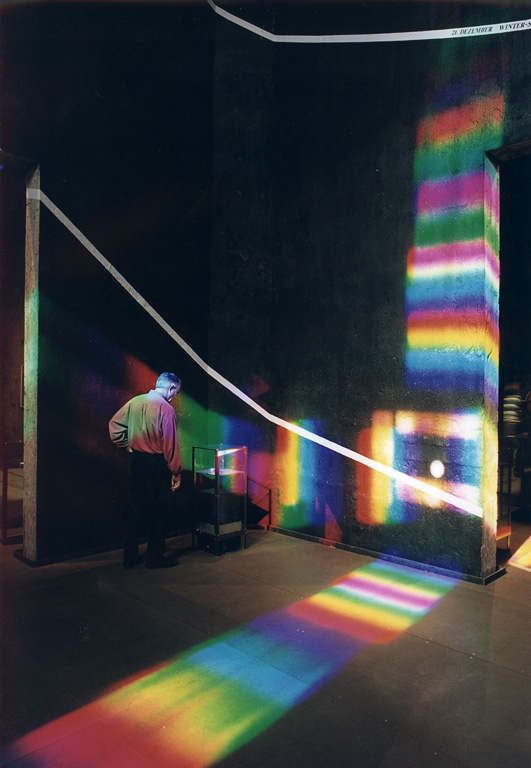
Sun, Moon and Stars(sonne, mond und sterne)Kokerei Zollverein, Essen, Germany
This piece, along with some of his other works is Erskine’s take on the sundial. Instead of the typical dark shadow cast by the dial his casts a prismatic rainbow onto the space.
Materials:
Sunlight
factory interior
Heliostat solar tracking mirror
Laser pointer
Laser-cut flat prisms
Astronomical time and date calculations
Erskine says all of his works are collaborations. While he means this literally for some of his pieces he also says that every installation is a collaboration with the architecture of the space he’s designing for.
Libraries
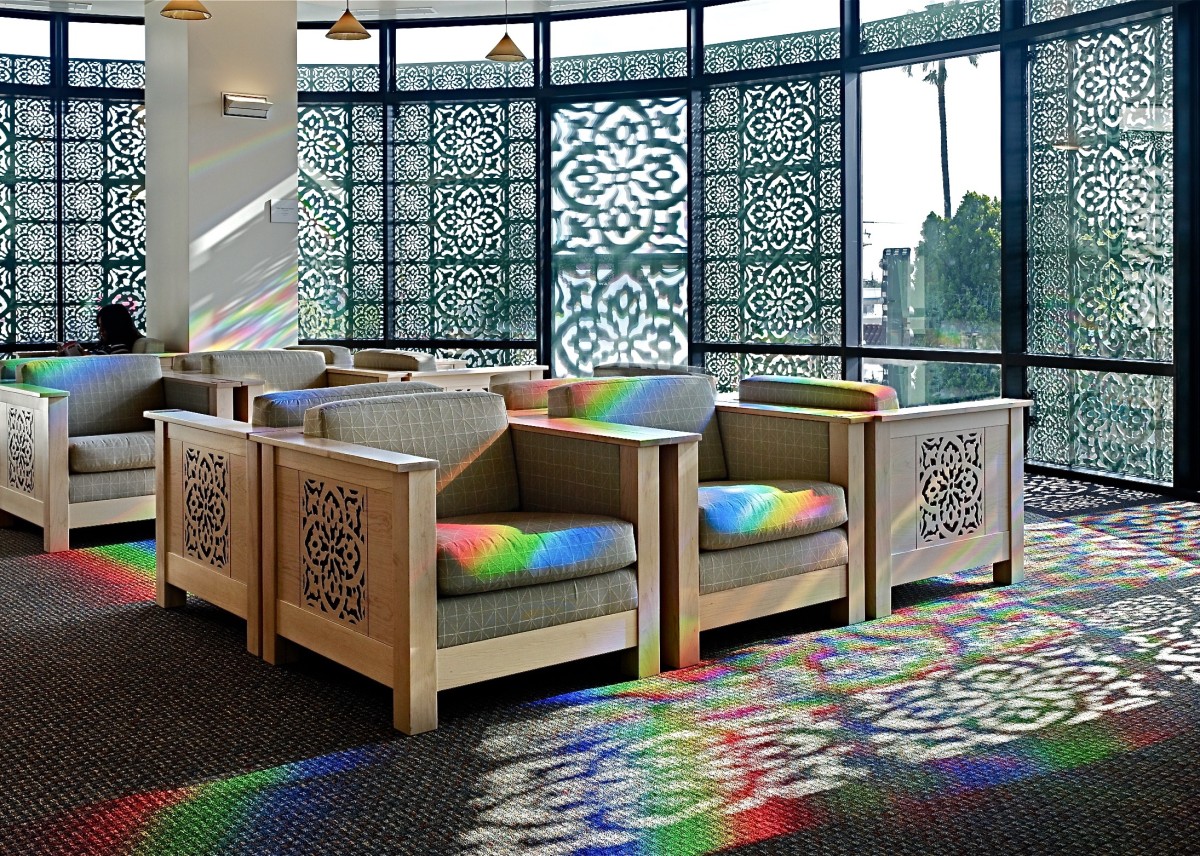
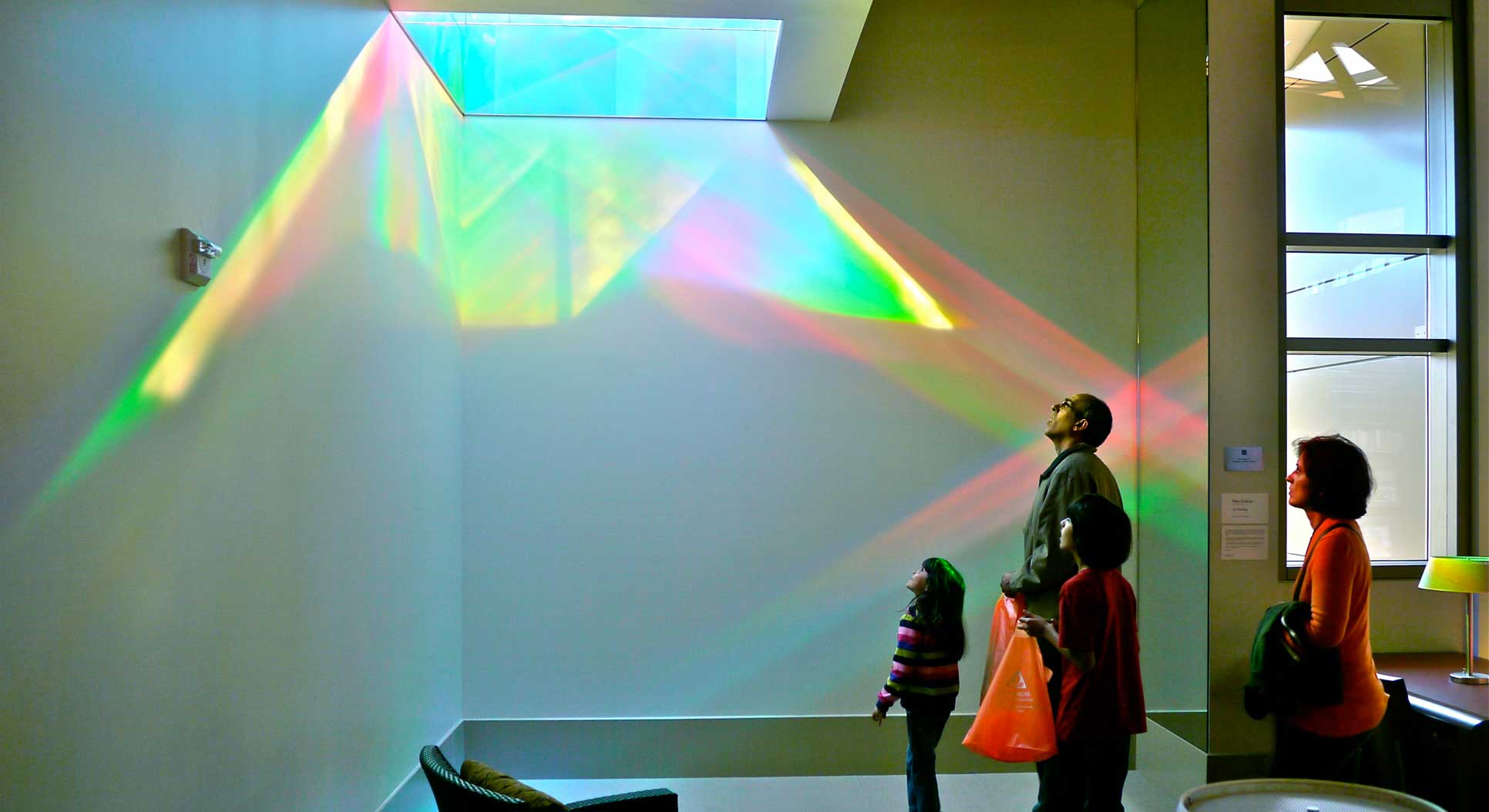
One of Erskine’s favorite spaces to design for are libraries. He describes them as spaces where time seems to stop and in the silence one can truly enjoy the living aspect of his art as the sun moves across the sky.
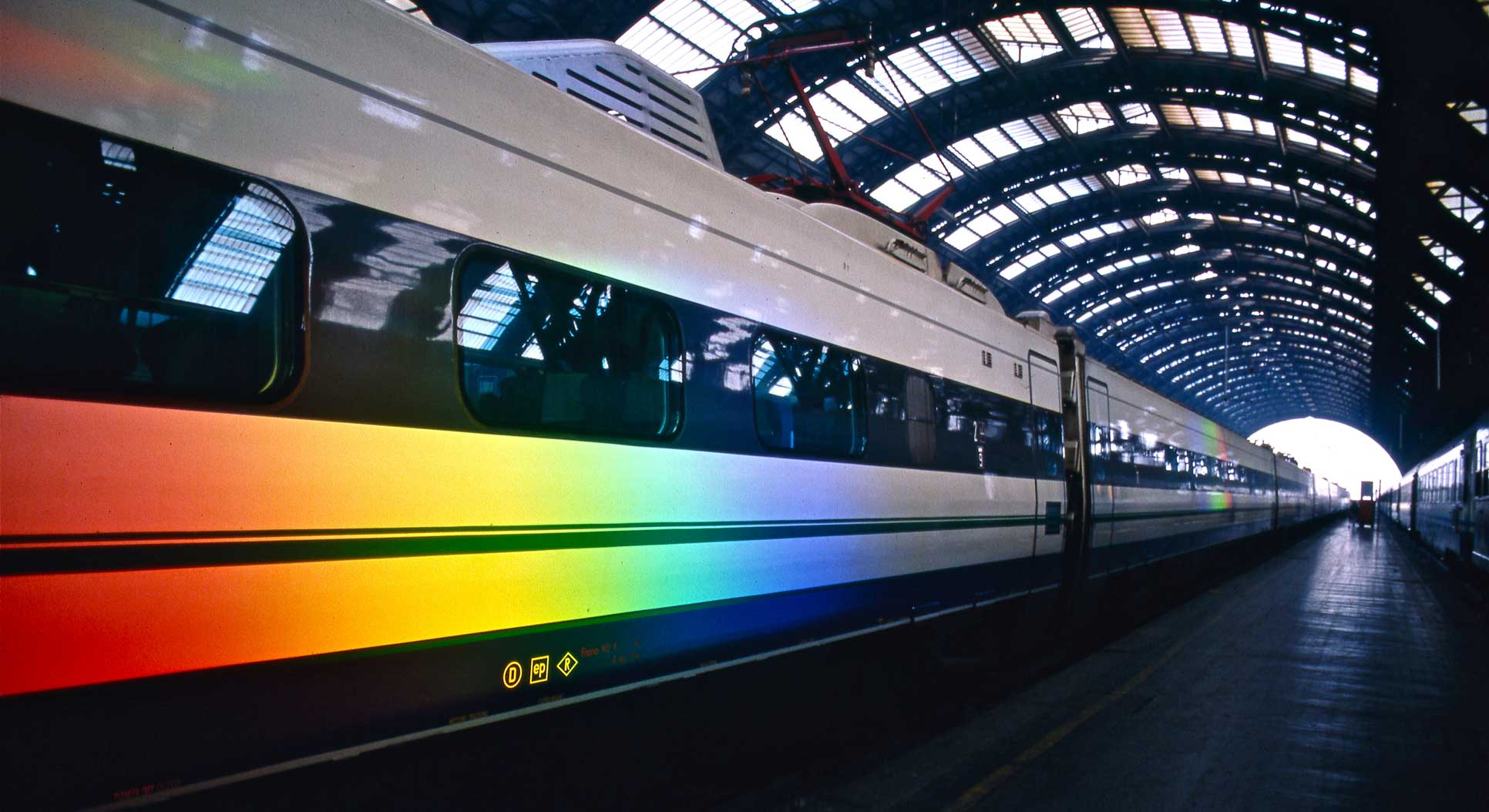
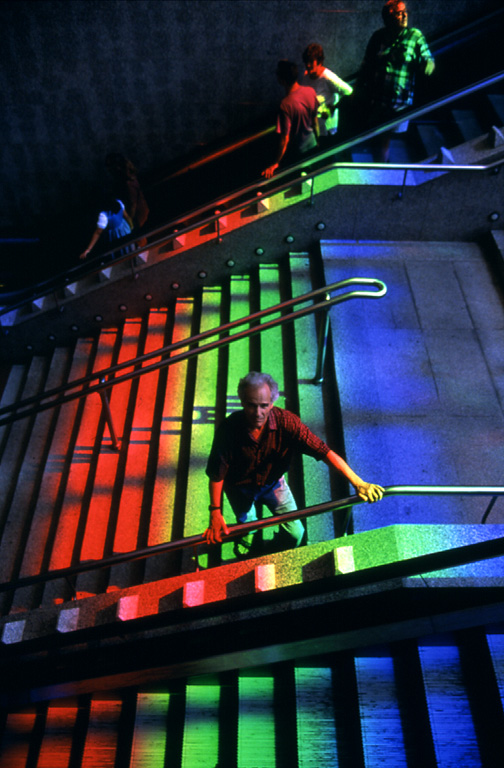
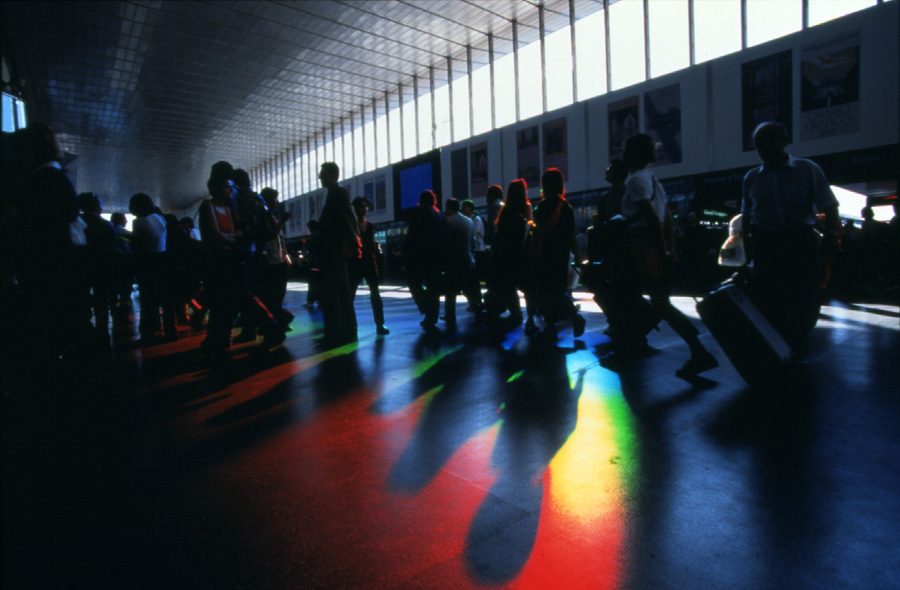
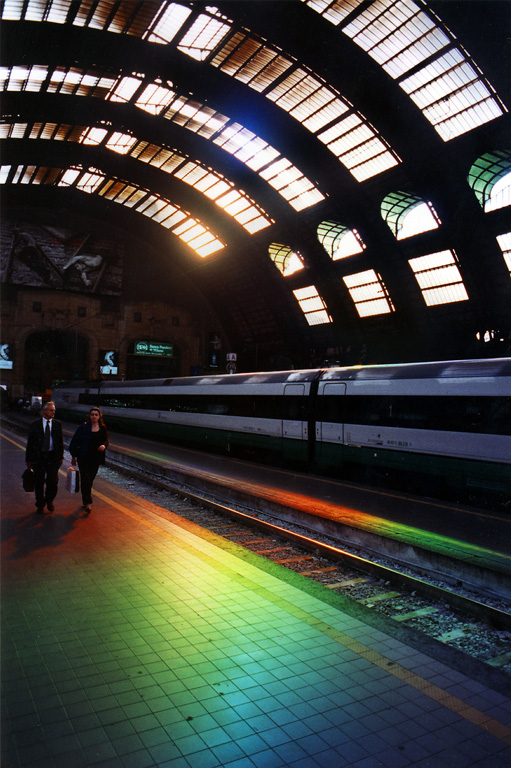
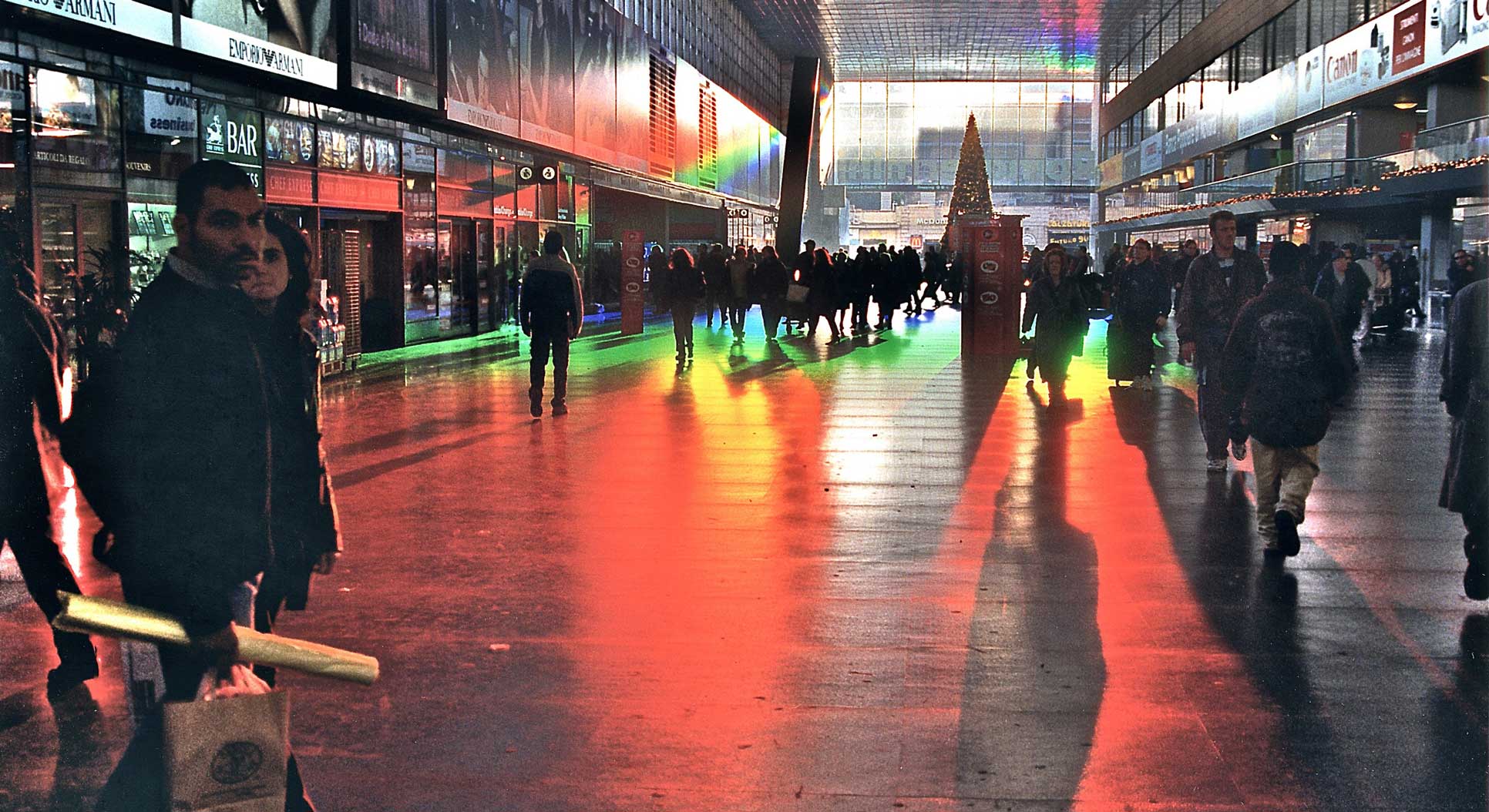
“CHRONOS” Milan Central Terminal, Milan, Italy and Termini Station, Rome, Italy
This is my favorite of his works I think the sweeping broad bands of light are truly amazing and it evokes the most emotion by placing the art all about solar power and nature inside the bustling train stations. Erksine describes it as an artwork for everyone and ends his description with the following:
“ I discovered in Italy, lovers kiss for good luck when they see a rainbow. ”
References:
Erskine, Peter. “Home- Solar Spectrum Environmental Art.” Erskine Solar Spectrum Art, 10 July 2018, erskinesolarart.net/. *Unless source is listed all images are from source 1 as well.